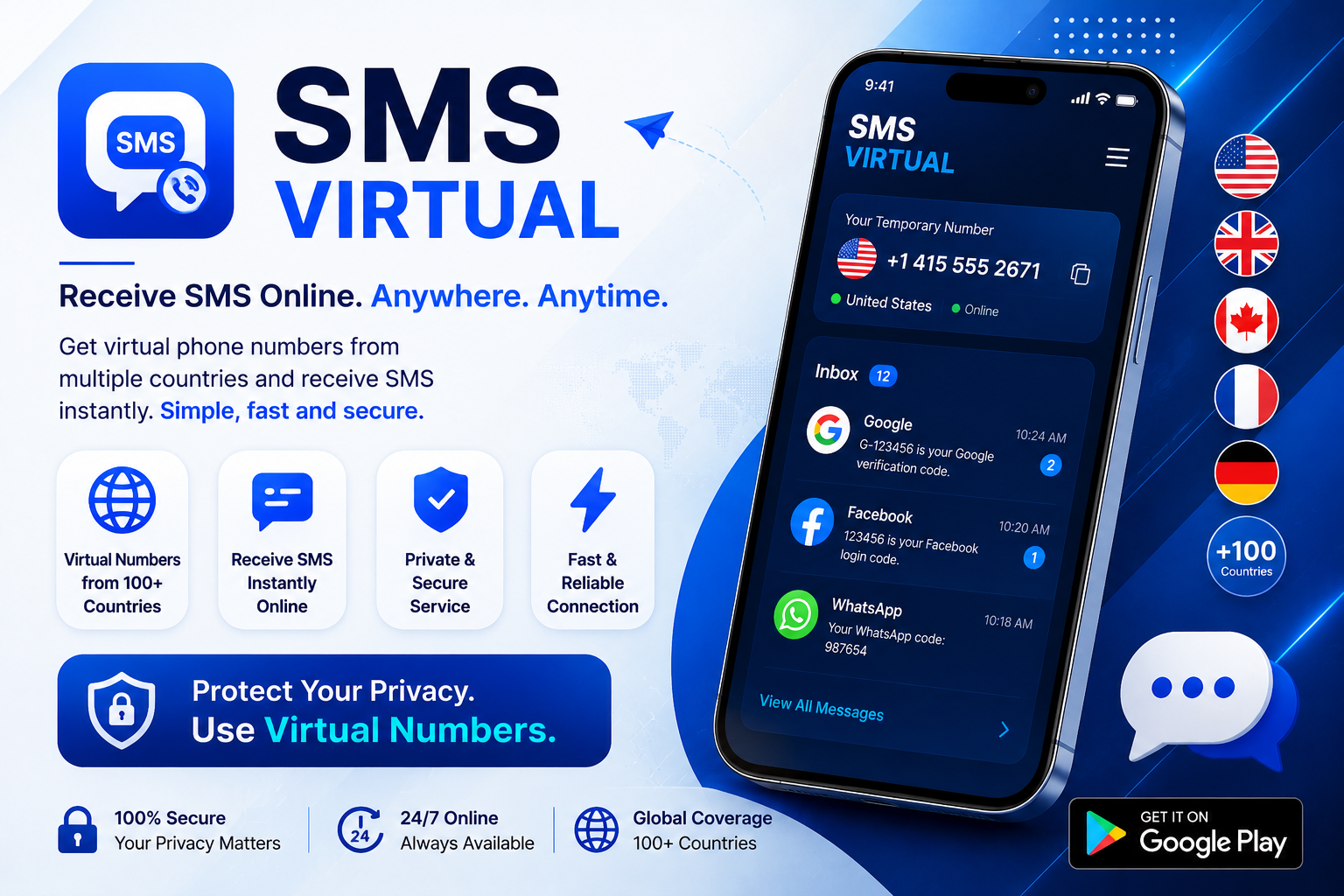
We've all been there. You're trying to sign up for a new social media app, a second-hand marketplace, or a promising new service, and you hit the inevitable wall: "Please enter your phone number for verification." It's a moment of hesitation. Do you really want to hand over your personal, permanent phone number to yet another company? In an age where data breaches are commonplace and our phone numbers have become a primary key to our digital identities, this seemingly simple request has become a major privacy dilemma. This is precisely where the concept of the virtual SMS number steps in, offering a simple, effective, and affordable shield for your personal privacy. Apps like "SMS Virtual - Receive SMS" are leading the charge, providing a practical solution to a modern digital problem.
The Simple Concept Behind Virtual Numbers
At its core, a virtual SMS number service is brilliantly straightforward. It provides you with a temporary, disposable phone number that you can use to receive text messages. The primary use case is account verification. Instead of using your real phone number, you use this temporary one to receive the verification code from services like WhatsApp, Telegram, or a new e-commerce site. This way, your real number stays private, hidden from companies and services you might not fully trust, significantly reducing your exposure to spam, unwanted marketing calls, and the risk of your number being leaked in a data breach.
Step-by-Step: How to Use a Virtual Number
Using one of these apps is designed to be incredibly simple, even for the non-tech-savvy. The process is usually broken down into a few clear steps. For instance, with the "SMS Virtual" app, you start by selecting the country and the specific service you need to verify for. If your service isn't listed, a generic "Other" option is available. Next, you'll see the price for the activation and you can get a number, provided you have sufficient credit in your account balance.
Once you have the number, you simply copy it and paste it into the service you're signing up for. Then, you wait. The service will send a verification SMS to that virtual number, and the message will appear within the app, often with a time limit of around 20 minutes to use it. This entire flow takes only a couple of minutes.
The Value Proposition: Security and Fair Pricing
The value of this service is clear. For a small fee, you are buying a significant layer of protection for your personal data. The pricing model is typically transparent and fair, as highlighted in the app's description. You pay per activation, and you only pay if you successfully receive the SMS. The promise of an automatic refund if you don't receive the message is a key trust signal, showing that the service is confident in its reliability and operates with user fairness in mind.
This model is particularly beneficial for frequent users of online services. Think about it: you can keep your work, personal, and "spam" accounts completely separate, all without having to buy a second physical SIM card. This can be a game-changer for digital nomads, privacy-conscious individuals, and anyone who is tired of being tied to a single number.
A Reality Check: Reading Between the Reviews
Like any service, the user experience can vary. The reviews for "SMS Virtual" present a mixed picture that's worth examining. On one hand, a significant number of users, with nearly 100,000 total reviews, have found the service "very good," "stable," and praised its "reasonable price." These positive reviews suggest that for many, the app works exactly as advertised.
However, some critical reviews highlight potential pitfalls. One user, in particular, warned against trusting the app, claiming they couldn't receive a verification code for a specific service (Douyin) over several days. This points to a critical nuance: the reliability of virtual numbers can sometimes depend on the service you're trying to verify. Some platforms are better at detecting and blocking virtual numbers, meaning success is not always guaranteed for every service. This is a crucial factor to consider.
Managing Expectations and Ensuring Success
Understanding this limitation is key to a positive experience. The app itself is a tool; its effectiveness is partially dependent on the platform you're using it on. For major, mainstream services, it often works perfectly. For more niche or highly security-conscious platforms, you might encounter issues.
To maximize your chances of success, it's helpful to:
- Choose the Right Service: Use the app primarily for less critical or mainstream services to avoid disappointment.
- Act Quickly: The 20-minute window means you need to be ready to complete the verification process promptly.
- Check Reviews: For a specific service, you can check the app's reviews or community forums to see if others have had success.
- Have a Backup Plan: It's wise to keep a backup method (like another virtual number service or, as a last resort, your real number) in case you encounter a service that blocks virtual numbers.
The Takeaway: A Valuable Tool in Your Privacy Arsenal
Despite some inconsistencies, the core value proposition of apps like "SMS Virtual" remains strong. They provide a much-needed service in a world increasingly concerned with digital privacy. The app clearly doesn't share your data with third parties and encrypts it in transit, which aligns with its core privacy mission.
Ultimately, a virtual SMS number app is a powerful tool for taking control of your personal information. It offers a simple, cost-effective way to create a buffer between your personal life and the numerous services you sign up for. While it's not a magic bullet for every situation and requires a bit of patience and expectation management, it is an indispensable addition to the privacy toolkit of any modern internet user. It empowers you to navigate the digital world on your own terms.